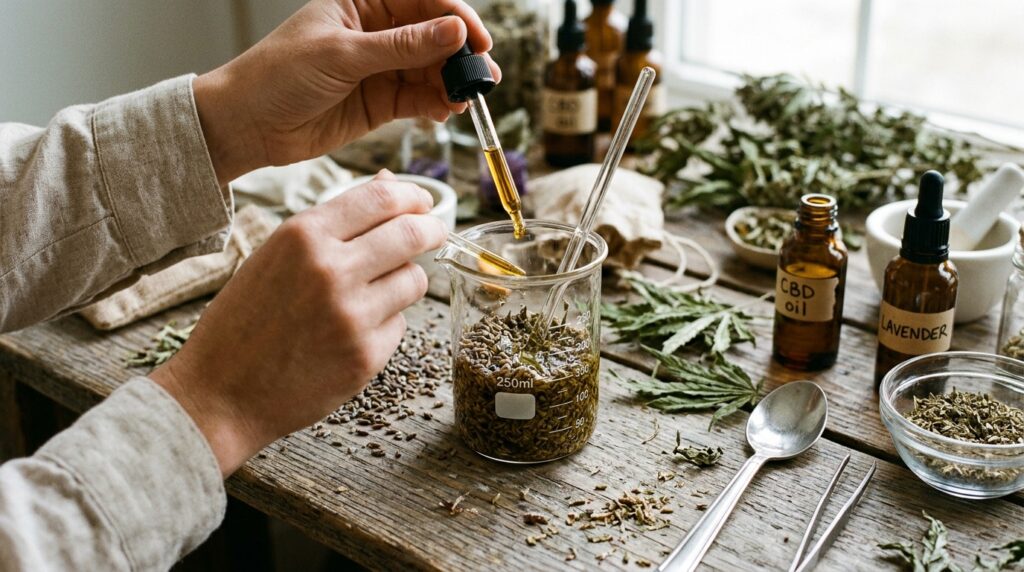
Pick up three bottles of CBD oil and the front labels look almost interchangeable. The differences sit in smaller print: how the extract was made, what else is in the bottle, and which cannabinoids survived processing.
Sorting those details is the real work of choosing CBD oil. Three terms appear again and again, and knowing what each one means removes most of the guesswork.
Spectrum: Full, Broad, or Isolate
Full spectrum
A full spectrum extract keeps most of what the hemp plant produces: CBD, minor cannabinoids such as CBG and CBN, terpenes, and trace THC up to 0.3 percent by dry weight in the plant material. A typical serving contains very little THC, though it can build up with heavy use. Anyone facing drug testing should treat full spectrum oil with caution.
Broad spectrum
Broad spectrum oil starts as a full extract and then goes through a step that removes most or all THC. The terpenes and other cannabinoids remain. Manufacturers sometimes advertise it as “THC-free,” a claim best checked against a lab report showing “ND” (not detected) for THC.
Isolate
Isolate is crystalline CBD, often 99 percent pure, with everything else stripped out. It has little taste or smell and contains no THC. Because nothing else rides along, it suits people who want a clean, measured amount of one compound.
Side-by-side view
| Type | Contains CBD | Other cannabinoids | THC |
|---|---|---|---|
| Full spectrum | Yes | Yes | Trace amounts |
| Broad spectrum | Yes | Yes | Usually none |
| Isolate | Yes | No | None |
The Entourage Effect Debate
Where the idea came from
In 1998, Shimon Ben-Shabat and Raphael Mechoulam proposed that inactive compounds in cannabis might boost the effects of active ones, and the term “entourage effect” took hold. In 2011, neurologist Ethan Russo expanded the idea in the British Journal of Pharmacology, suggesting that terpenes and cannabinoids may work together.
What the data show so far
The idea is plausible and still unproven in people. Some laboratory and animal work supports it. Human trials comparing full spectrum with isolate are few. A buyer who prefers full spectrum for this reason is acting on a reasonable hypothesis and not a confirmed result.
A practical reading
Where THC exposure is not a concern, trying a full spectrum oil and an isolate in turn, each for two weeks, answers the question for that person better than any article can.
Extraction and Carrier Oils
Extraction methods
Supercritical CO2 extraction uses pressurized carbon dioxide and leaves no solvent residue, which is why many premium products cite it. Ethanol extraction is common and efficient. Solvents such as butane or hexane exist in the industry too, and a lab report should confirm that no residue remains. A label that names its extraction method is usually from a seller with nothing to hide.
Carrier oils
MCT oil, derived from coconut or palm, dissolves cannabinoids well and has a neutral taste. Olive oil adds a noticeable flavor. Hemp seed oil carries its own nutty note and a modest fatty acid profile. Anyone with a tree nut or coconut allergy should read the ingredient list before buying.
Flavorings and additives
Added flavors, sweeteners, and essential oils make a product easier to taste, and they also lengthen the ingredient list. Unflavored oil is the simplest option for someone who wants to know exactly what is in the bottle.
Putting the Choice Together
Questions that narrow the field
- Will THC testing ever apply? If yes, isolate or lab-verified broad spectrum
- Is the taste a barrier? If yes, flavored oil or capsules
- Is a nut or coconut allergy present? If yes, check the carrier oil
- Is the budget fixed? If yes, compare price per milligram
Reading the certificate
A third-party certificate of analysis lists cannabinoid content, and a good one also reports pesticides, heavy metals, residual solvents, and microbes. The batch number on the report should match the number on the bottle. Reports that are blurred, old, or missing a lab name tell little.
A sample starting plan
One workable plan is to select a modest-strength bottle, take a small serving once daily, and keep it steady for two weeks before changing anything. A written note on timing and effects turns an uncertain purchase into a clear decision.
Final Thoughts
The right CBD oil comes down to spectrum type, extraction method, carrier oil, and a lab report that matches the bottle. Testing one variable at a time shows what works.